Vasa: the warship that sank on her first day, and came back 333 years later.
On a Sunday afternoon in August 1628 the Swedish navy’s newest and most heavily armed warship set sail in Stockholm harbour. She went about 1,300 metres. In 1961 she came back up, almost complete, and today she stands in her own museum. Here is how she was built, why she sank, how she was found and raised, and how she is being kept from falling apart, with every fact linked to its source.
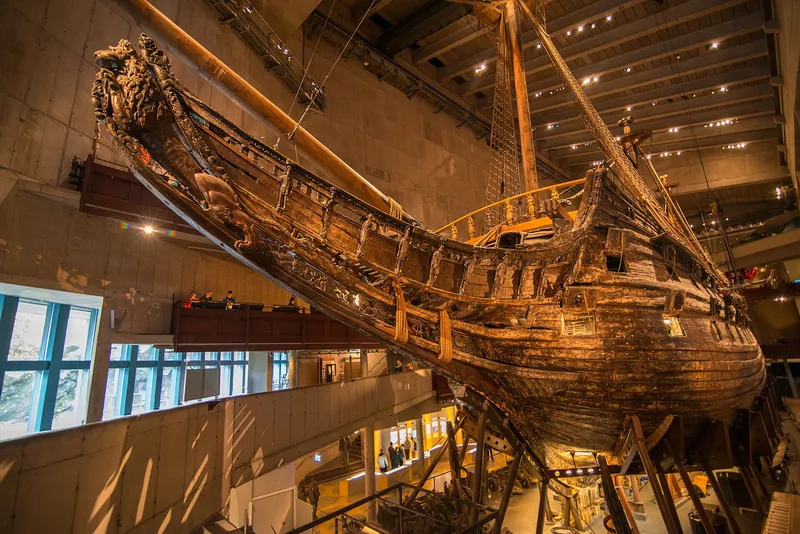
Vasa the warship of 1628. This site is about one ship: the Swedish warship that sank on her maiden voyage in Stockholm, was raised in 1961 and is now in the Vasa Museum. The Vasa royal family appears only as background, and nothing here is about the other things that share the name.
The short version
Like the rest of the royal navy, Vasa belonged to the king: Gustav II Adolf, who ordered the ship in 1625. Vasa Museum FAQ Building began in 1626 and was finished in 1628. Vasa Museum FAQ
Finished, Vasa was 69 metres long and more than 50 metres tall from the keel to the top of the mainmast. Vasa Museum timeline
The museum’s short answer: Vasa was top-heavy, a little too tall and a little too narrow, with too little hull under water for what stood above it, and the gunports were open when a sudden gust made her heel. Vasa Museum FAQ
All but 30 of the crew and guests survived, the Vasa Museum says. Most of the dead were trapped inside the ship. Vasa Museum
How many died, and how many were aboard, is one of several things the sources disagree on; the story page sets them out side by side.
On 25 August 1956 Franzén’s home-made coring device brought up black oak; 20 metres further on, it did it again. Vasa Museum
Vasa came back to the surface on Monday 24 April 1961, after 333 years under water. Vasa Museum timeline
Over 40,000 objects were found in and around the ship. Vasa Museum
The cradle that has held Vasa since the 1960s is damaging the hull. Its 17 pairs of supports are being replaced with 27 steel cradles plus an internal steel skeleton; the work began in April 2024. Vasa Museum
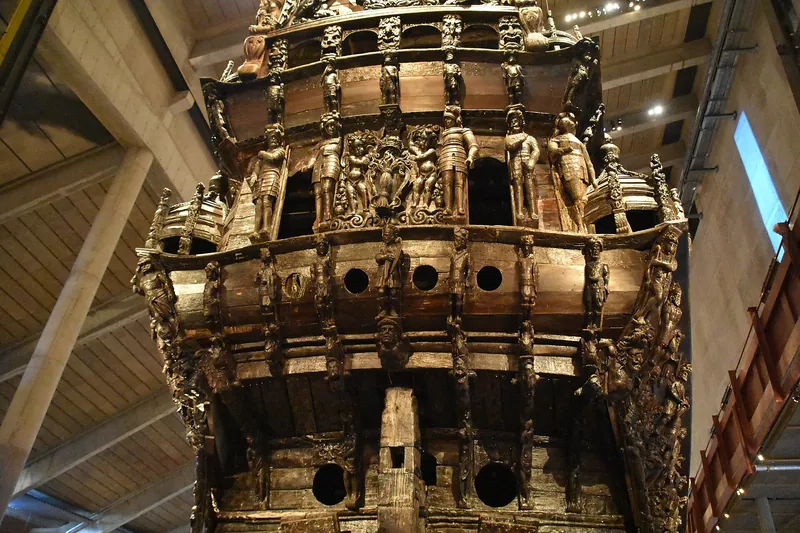
Explore the story
 The storyA king at war, a Dutch shipwright and a Sunday afternoon in 1628.
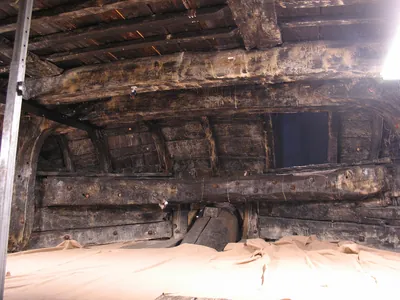 Why it sankToo tall, too narrow, open gunports and two kinds of ruler.
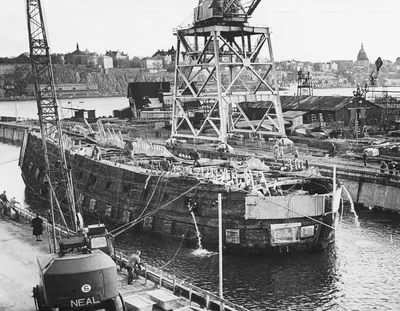 The salvageBlack oak on a coring tube, six tunnels and 18 lifts.
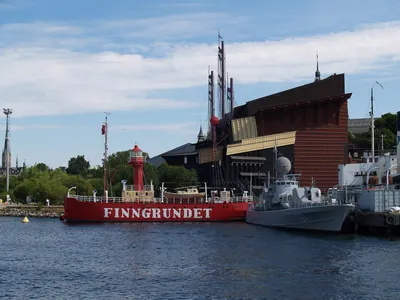 The museum todayThe hall, the ship’s new steel support and visiting.
Tile pictures are credited on their pages and on the credits page.